
Slab Leak or Something Else? How San Diego Homeowners Can Tell
If you own a home in San Diego, there’s a good chance it sits on a concrete slab foundation. That slab is sturdy, but the copper and PVC water lines running beneath it aren’t invincible — and when one of them fails, you get a slab leak.
The tricky part? A slab leak San Diego homeowners face often hides in plain sight, mimicking everyday plumbing quirks until the damage becomes serious and expensive. This guide walks you through what a slab leak actually is, the warning signs to watch for, and exactly what to do the moment you suspect one.
What Is a Slab Leak?
A slab leak is a water leak in one of the pipes located directly beneath or within your home’s concrete foundation. Most homes have two sets of these lines: pressurized supply lines that carry fresh water in, and drain lines that carry waste water out. When either develops a crack, pinhole, or loose joint under the slab, water begins escaping into the ground and, eventually, up into your living space.
Several factors make slab leaks especially common across San Diego County. Many older neighborhoods still rely on copper piping that corrodes over decades, a process accelerated by San Diego’s notoriously hard water. Shifting, expansive soils common to Southern California put stress on rigid pipes, while high water pressure and constant abrasion — where a pipe rubs against concrete or rebar — slowly wear the line down. Any one of these can turn a hairline weakness into an active leak.
Signs of a Slab Leak
Knowing the slab leak signs helps you catch a problem early, before it undermines your flooring or foundation. Here’s how to tell if you have a slab leak.
1. A Warm Spot on the Floor
If a section of your floor feels unusually warm underfoot — especially on tile or hardwood — it may sit directly above a leaking hot water line. Hot water escaping under the slab heats the concrete above it, creating a localized warm patch with no other explanation. Cold-line leaks won’t produce heat, but they usually reveal themselves through the other signs below.
2. Your Water Bill Is Higher Than Normal
A sudden, unexplained jump in your monthly water bill is one of the most reliable slab leak signs. If your usage habits haven’t changed but the bill keeps climbing, water is likely escaping somewhere you can’t see — 24 hours a day, seven days a week.
3. The Water Meter Moves When All Water Is Off
This is a simple test any homeowner can run. Turn off every faucet, appliance, and water-using fixture in the house, then check your water meter. If the dial or digital readout is still ticking upward, water is flowing somewhere in your system — a strong indicator of a hidden leak beneath the slab.
4. The Sound of Running Water When All Taps Are Closed
Stand in a quiet room with every tap shut off and listen. A faint hissing, rushing, or trickling sound coming from the floor or the base of a wall often means water is moving through a compromised line under your foundation.
5. Cracks in the Floor or Walls
As water erodes the soil beneath your slab or saturates the concrete, the foundation can shift. That movement frequently shows up as new cracks in flooring, tile, drywall, or exterior walls. Paired with moisture, warping, or a musty smell, cracks are a red flag that a slab leak may already be affecting your home’s structure.
What to Do First
If you notice one or more of these signs, act quickly — a slab leak won’t fix itself, and every hour of undetected water flow adds to the damage.
First, shut off your water at the main supply valve. This valve is usually located where the water line enters your home — often outside near the street, in the garage, or beside your water heater. Turning it off stops additional water from feeding the leak and limits further harm to your foundation and flooring.
Second, call a licensed professional. Slab leaks are hidden inside concrete, so pinpointing and repairing them requires specialized leak-detection equipment and experience. Resist the temptation to break into your slab yourself — guessing the wrong spot means unnecessary demolition and cost. A qualified technician can locate the exact source and recommend the least invasive fix.
When Water Damage Is Already Inside the Wall or Floor
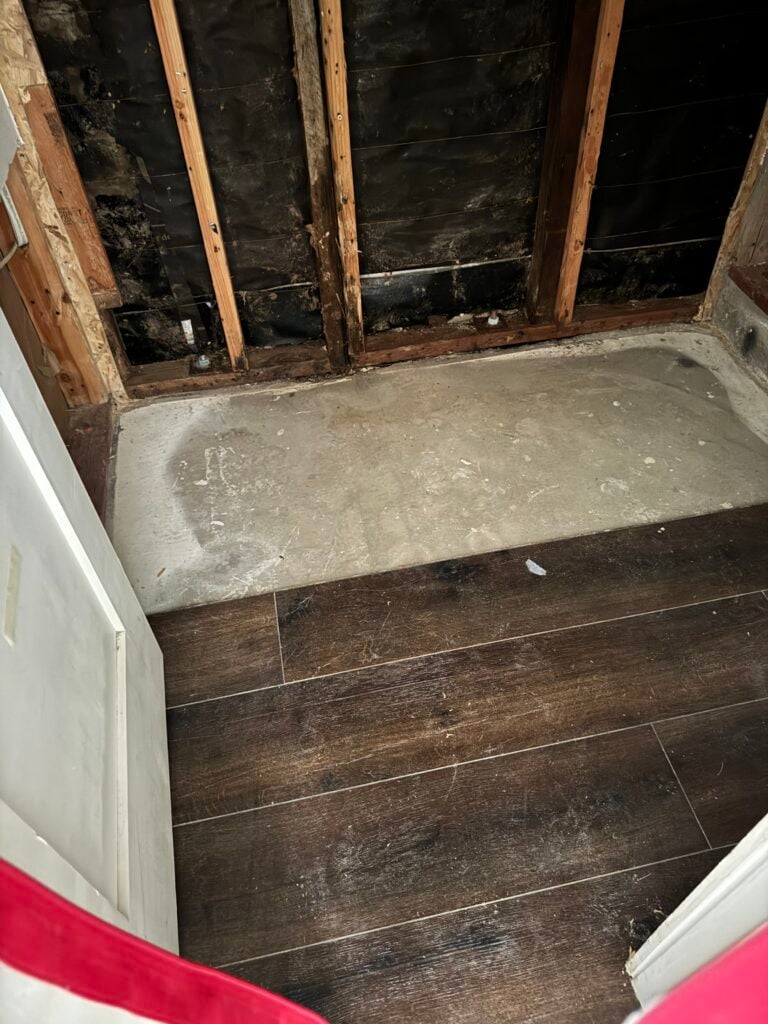
Sometimes a slab leak goes unnoticed long enough that water has already wicked up into your flooring, baseboards, and walls. At that point, stopping the leak is only half the job — the moisture left behind becomes the next problem.
Trapped water saturates drywall, warps hardwood, lifts tile, and creates the damp, dark conditions where mold thrives, often within 24 to 48 hours. You might see bubbling paint, swollen baseboards, discoloration, or notice a persistent musty odor. Left untreated, this hidden moisture spreads through wall cavities and subflooring, leading to costly structural repairs and potential health concerns.
This is where professional water damage restoration becomes essential. Specialists use moisture meters and thermal imaging to map exactly how far the water has traveled, then perform thorough water removal and extraction to dry the affected materials before permanent damage sets in. The faster this happens, the more of your home you can save.
How Revive Restoration Fixes It
When a slab leak leaves water damage behind, Revive Restoration helps San Diego homeowners get their homes back to normal — fast. As a local restoration team, we understand the region’s homes, soils, and plumbing, and we respond quickly to limit the spread of damage.
Our process starts with a detailed inspection using advanced moisture-detection tools to find every pocket of hidden water. From there, we handle professional water extraction, structural drying with commercial-grade air movers and dehumidifiers, and full restoration of damaged drywall, flooring, and finishes. We also address mold risk before it takes hold, so you’re not fighting a second problem weeks later.
We know how stressful a slab leak can be, which is why we focus on clear communication, thorough documentation for your insurance claim, and workmanship that lasts. If you suspect a slab leak or have already spotted water damage inside your home, don’t wait — the sooner we start, the less you’ll lose.
| Think you have a slab leak? Every hour counts once water reaches your walls and floors. Call Revive Restoration for a fast local response. |
Frequently Asked Questions
How do I know if I have a slab leak?
Watch for a warm spot on the floor, an unexplained spike in your water bill, a water meter that keeps moving when all water is shut off, the sound of running water with every tap closed, or new cracks in floors and walls. If you notice one or more of these signs, shut off your water at the main valve and call a professional for slab leak detection.
Are slab leaks covered by homeowners insurance in San Diego?
Many California homeowners policies cover the resulting water damage and the cost to access the leak, even when they don’t cover the pipe repair itself. Coverage varies by policy, so review your terms and document everything. Revive Restoration can provide detailed documentation to support your claim.
How much does slab leak repair cost in San Diego?
Cost depends on the leak’s location, the repair method, and how much water damage has already occurred. Simple spot repairs are far less expensive than jobs involving extensive flooring or drywall restoration, which is why early detection saves money. A professional assessment is the best way to understand your specific situation.
Can a slab leak cause mold or foundation damage?
Yes. Standing moisture from a slab leak can trigger mold growth within 24 to 48 hours and, over time, erode the soil beneath your foundation, leading to cracks and structural movement. Acting quickly to stop the leak and dry the area is the best way to prevent both problems.